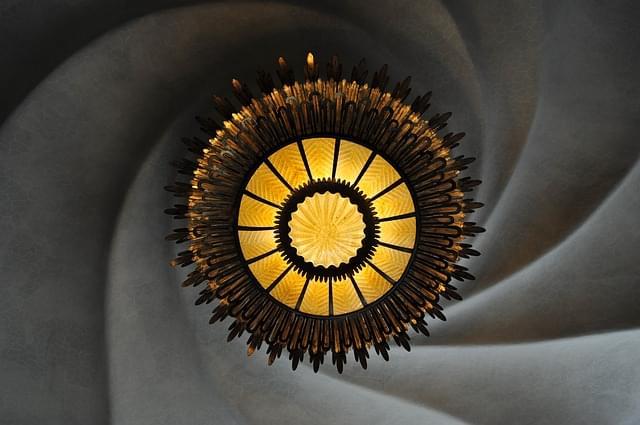
 Like the Sagrada Familia, Casa Batllò was born from the genius of Gaudi. Located on Passeig de Gràcia, it is one of the city's most extraordinary works of architecture. It's impossible not to notice it, both for its unmistakable silhouette and for the sheer volume of tourists queuing to visit it. Here is everything you need to know to organise a visit.
Opening hours and prices
Hours: daily from 9am to 9pm: closes only on 25 December and 01 January.
Best time to avoid queues: The only way to avoid queues is to be at the entrance before opening time, around 8 - 8:30 a.m., or at a time close to closing time, around 7:30 p.m. Absolutely avoid the 10 a.m. to 1 p.m. time slot, when tourists flock in droves.
Ticket price: €28.50 for adults. Included in the price is an audio-guide. Casa Batllò offers its visitors different types of visits (theatralised visit rather than night visit and so on), each with a different type of ticket. Buy online: entrance ticket + Smart Guide
Reductions: €25.50 for children aged 7 to 18, students and over 65
Free admission: children, teachers accompanying groups (1 for every 20 people). Tour guides accompanying groups, accompanying blind people, journalists presenting the Barcelona PressCard. ICOM-ICOMOS members.
What to see and how to visit Casa Batllò
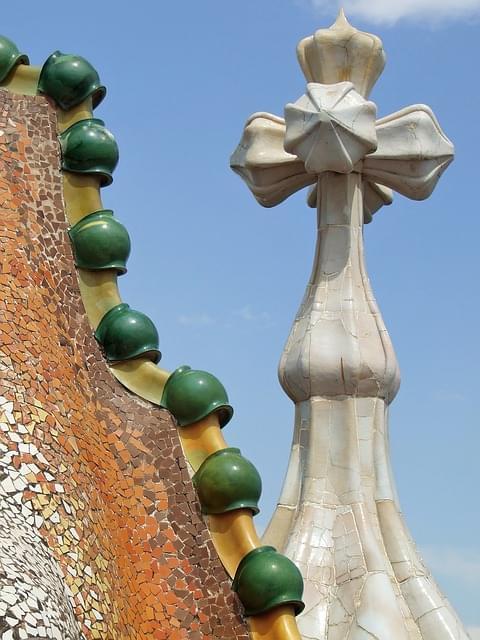 Like the Sagrada Familia, Casa Batllò also deserves to be admired from two different viewpoints: outside the building and inside.
The building's distinctive façade changes colour as the light and the viewer's position changes and is divided into three distinct sections, each reflecting a different aspect of the human anatomy. The base, in fact, appears as a latticework of b ones while, the balconies, resemble jawbones. Furthermore, staring at the top of the façade, it is easy to notice its abstract and chaotic appearance, similar to the collection of blood vessels and muscles. The roof also has a scaly effect, making it resemble the tail of an enormous dragon, while the entire building is covered in colours reminiscent of marine life. The combination of all these features has earned the building a number of nicknames, including: House of Bones or Dragon House.
The architectural surprises continue inside the building, with swirls, waves and spirals characterising all the details of the house. Given the particularity of the interiors, the entrance ticket to the work includes an audio-guided tour available in 10 languages (English, Spanish, Catalan, French, German, Italian, Portuguese, Russian, Chinese and Japanese) that clarifies, thanks to a very precise visit path, the different aspects of Gaudì's stylistic choices: it is therefore recommended not to leave the guided tour behind, in order to avoid losing the thread of the whole discourse. The tour begins on a grand staircase leading to the Piano Nobile, the main floor, former residence of the Batlló family. From here, it is then possible to access the dreamlike skylight, where one can swim, almost literally, among an array of colours. The house is also designed so that natural light penetrates all its rooms and thus creates plays of colour with the azulejos on the walls.
As mentioned earlier, the façade of Casa Batllò changes colour depending on the light, and the position of the person looking at it. That's why, among the different visit options, a night version is also available, with a tour starting at 8pm and ending with a live music concert, on the roof of the house with a view over Barcelona, drinks included.
Where it is located and how to get there
On foot from Plaça de Catalunya: head northwest towards Ronda de la Universitat. Continue on Rambla de Catalunya Turn right and take Gran Via de les Corts Catalanes Turn left and take Passeig de Gràcia. Approximately 1 km (9-minute walk). Get directions
By bus: Lines: H10, V15, 7, 22 and 24. Barcelona Tourist Bus (red and blue) Casa Batlló - Fundació Antoni Tàpies. City Tours (Barcelona Tours) Stop 3 A, Passeig de Gràcia-Casa Batlló
By metro: the nearest station is Passeig de Gràcia (L2, L3 and L4)
Where to stay nearby
If you're planning a visit to Casa Batllò, you may want to consider staying nearby to fully appreciate this beautiful attraction. The good news is that there are many accommodation options to suit all budgets in the Passeig de Gràcia area. For example, the Gaudi Apartment is a fantastic option for those who want to experience the city like a local. This stylish apartment is located just a few minutes' walk from Casa Batllò and offers a comfortable stay with all the modern amenities. Other nearby options include the luxurious Mandarin Oriental Barcelona, the chic Majestic Hotel & Spa Barcelona, and the budget-friendly Casa Gracia Hostel. Don't miss the chance to experience this beautiful area of Barcelona, which is not only home to Casa Batllò, but also to many other impressive works of architecture. Book your accommodation today and start planning your trip!
Useful tips for visiting the attraction
Get up early: Ideally, you should reach the entrance before 9am, opening time, perhaps with a ticket purchased on the Internet.
Buy the city card : Barcelona Pass: public transport and free entry allows its holder a 20% discount on the entrance ticket.
Priority ticket: the priority entrance option costs €5.00 more than the standard one and allows you to skip the line. A good solution is to buy both Casa Bttlo and Casa Milà priority tickets together.
Minimum time: the minimum time for an 'exhaustive' visit is a couple of hours
Disabled person's ticket: can only be purchased at the box office on presentation of an official document certifying the degree of disability.
History, trivia and practical information: what to know in brief
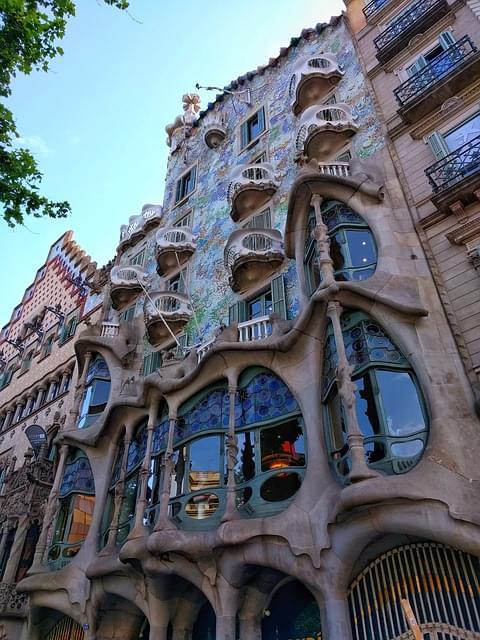 The Casa Batlló is considered one of the most original creations of the famous architect, the building was declared a UNESCO World Heritage Site in 2005. Its genesis began in 1904 when Josep Batlló, a wealthy textile industrialist, commissioned Gaudí to refurbish a modest building purchased the previous year on Passeig de Gràcia.
Gaudí's work, completed in 1907, considerably altered the appearance of the building, revolutionising the main façade, enlarging the central courtyard and raising two storeys that did not exist in the original construction. On the ground floor were the stables, later used as storerooms, and the common hall. The first floor of the palace, the so-called piano nobile, was used as the Batlló family residence, while the other four floors housed eight flats for rent.
Today, Casa Batlló is one of the most visited attractions in Barcelona, but many make the mistake of forgetting the rear façade. Certainly, the rest of the structure has nothing to do with its monumental façade but, nevertheless, it has some peculiarities worth seeing. Moreover, according to the story, Gaudí's choice to turn the roof of the building into a dragon's tail was due to the intrinsic meaning of the work itself: the representation of the legend of St. George and his dragon.